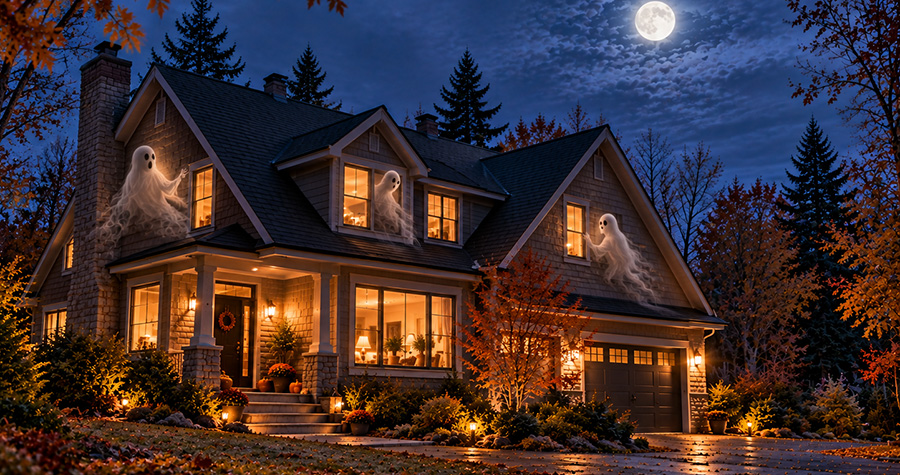
You’re relaxing comfortably in your living room when suddenly, you hear a creaking sound coming from the wall. A little later, a mysterious whistling noise seems to come from the ceiling. Then, a knocking sound echoes from another room!
With Halloween just around the corner, your imagination might start playing tricks on you. But before deciding your house is haunted, you should know that these noises usually have much more down-to-earth explanations.
And quite often, your heating or ventilation system could be the real culprit!
Mysterious Creaking Sounds Out of Nowhere
You’ve probably heard your house creak before, especially when outdoor temperatures begin to drop.
These noises can result from materials expanding and contracting as temperatures change.
Metal ventilation ducts, for example, may expand when warm air begins circulating and contract as they cool down. This can produce popping or creaking sounds that sometimes catch you by surprise.
Wooden structures, floors, and certain framing components can also react to changes in temperature and humidity.
Rest assured, these sounds are often perfectly normal!
Strange Whistling Sounds in the Walls
A whistling noise coming from an air vent might make you think an invisible presence is trying to get your attention.
In reality, it’s often related to an airflow problem.
A dirty filter, a partially blocked vent, or an improperly balanced duct system can create air turbulence and produce whistling sounds.
In some cases, ducts that are too narrow or poorly suited to the system’s airflow requirements may also be responsible.
If these noises become frequent or particularly bothersome, having your ventilation system inspected could help identify the cause.
Knocking Sounds Coming from the Basement
Now, that’s the kind of noise that could make even the bravest homeowner jump!
In homes equipped with hot-water heating systems, certain knocking sounds may come from the pipes.
As hot water circulates, pipes expand and may rub against surrounding materials. Improperly secured supports or trapped air in some systems can also cause unusual noises.
In forced-air heating systems, popping sounds may sometimes come from metal ducts reacting to changes in temperature or air pressure.
Although many of these occurrences are harmless, new, repetitive, or particularly loud noises deserve attention.
Cold Drafts That Send Shivers Down Your Spine
You’re sitting comfortably when a sudden cold draft brushes against the back of your neck.
A ghost passing behind you? Probably not!
Air leaks around windows, doors, or other openings can create unpleasant drafts.
Uneven heat distribution or an improperly balanced ventilation system can also make these sensations more noticeable.
These minor inconveniences don’t just affect your comfort. They can also increase your home’s heating needs.
When Should You Be Concerned?
Although most occasional household noises have perfectly reasonable explanations, certain warning signs shouldn’t be ignored.
A sudden, unusual noise coming from your heating equipment, significant vibrations, persistent knocking, or a noticeable change in how your system operates may indicate that an inspection is needed.
Regular maintenance of your heating and ventilation equipment can help prevent many problems and keep everything running smoothly.
No Ghost Hunters Required!
At Pétrole Pagé, we don’t claim to chase away the spirits that might be haunting your home!
However, our team has the expertise to assess your heating and ventilation systems, check your home’s air distribution, and recommend solutions suited to your installation.
So, the next time a mysterious creaking sound makes you jump, there’s no need to reach for the garlic and crucifixes!
Your house probably isn’t haunted… it might simply be trying to tell you that your heating or ventilation system needs a little attention!
Happy Halloween from the Pétrole Pagé team! 👻