As temperatures begin to drop, heating quickly becomes one of the biggest household energy expenses. However, cold weather isn’t always the only reason behind higher energy bills. Certain everyday habits, sometimes adopted with the intention of saving money, can actually have the opposite effect.
Here are a few habits worth reconsidering to keep your home comfortable without wasting energy.
1. Turning Up the Thermostat to Heat Your Home Faster
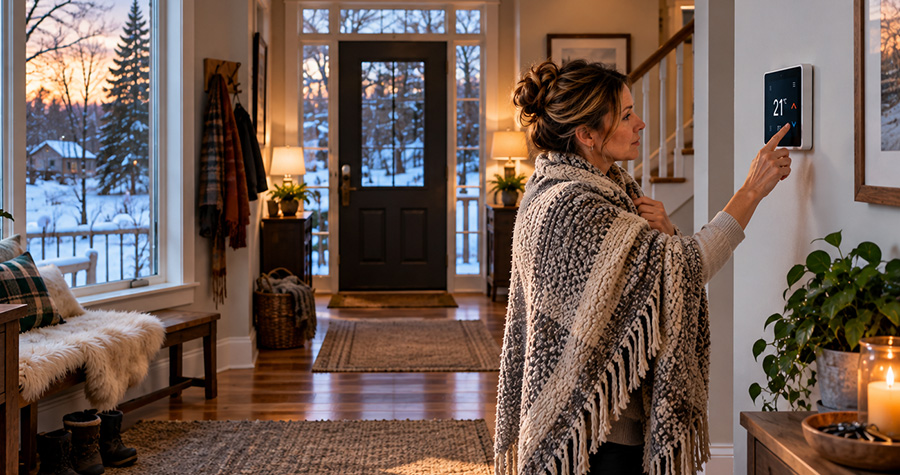
It’s a common reaction: when you feel cold, you turn up the thermostat several degrees, hoping to warm your home more quickly.
However, with most conventional heating systems, setting the thermostat to 25°C instead of 21°C won’t heat your home any faster. The system simply runs longer to reach the higher temperature.
It’s better to select a comfortable temperature and let your heating system do its job.
2. Constantly Adjusting the Temperature
Some homeowners adjust their thermostats several times a day, believing this will help reduce energy consumption.
While moderately lowering the temperature overnight or during extended absences can generate savings, frequent and significant temperature changes aren’t necessarily beneficial.
This is particularly true for certain heat pumps, which may operate less efficiently when they need to quickly raise the temperature by several degrees, especially if auxiliary electric heating is activated.
A programmable or smart thermostat, properly configured for your equipment, can help maintain a good balance between comfort and energy savings.
3. Blocking Warm Air Vents
A sofa placed in front of a heating vent, a rug covering a floor register, or heavy curtains preventing warm air from circulating may seem harmless.
However, these obstacles interfere with the proper distribution of warm air throughout your home.
In forced-air heating systems, insufficient airflow can also reduce heating efficiency and, in some situations, cause operating problems.
It’s important to keep supply vents and return air grilles unobstructed to promote proper airflow.
4. Neglecting to Replace Air Filters
A dirty filter forces your system’s blower to operate under less favourable conditions to circulate air.
Depending on the type of installation, this can reduce airflow, affect comfort, and increase energy consumption.
An excessively dirty filter can also contribute to premature wear on certain components.
Replacement frequency depends on several factors, including the type of filter, how often the system operates, and the presence of dust or pets in your home.
Regularly checking your filters is a simple way to prevent unnecessary problems.
5. Closing Heating Vents in Unused Rooms
It may seem logical that closing air vents in rooms you rarely use would automatically reduce heating costs.
However, in a central forced-air heating system, this practice can disrupt airflow distribution and increase pressure within the ductwork.
The result? Some rooms may become less comfortable, and the system may operate less efficiently.
Before making changes to your home’s airflow distribution, it’s best to consult a specialist.
6. Ignoring Small Sources of Heat Loss
A window that lets in a slight draft, worn weatherstripping, or a poorly fitted door may seem like minor issues.
But when these air leaks add up, they increase heating demands and can create uncomfortable cold spots.
Checking door and window seals, improving airtightness, and ensuring adequate insulation are all effective ways to help keep heat inside your home.
Efficient Heating Starts With Good Habits
Reducing energy consumption doesn’t necessarily mean sacrificing comfort. It’s about understanding how your heating system works and adopting habits suited to your installation.
A high-performance heating system that is properly maintained and adjusted can help keep your home comfortable while minimizing unnecessary expenses.
At Pétrole Pagé, our team has the expertise to advise you on the operation, maintenance, and optimization of your heating and ventilation systems.
Because comfort also means enjoying the warmth of your home without wasting the energy that produces it.