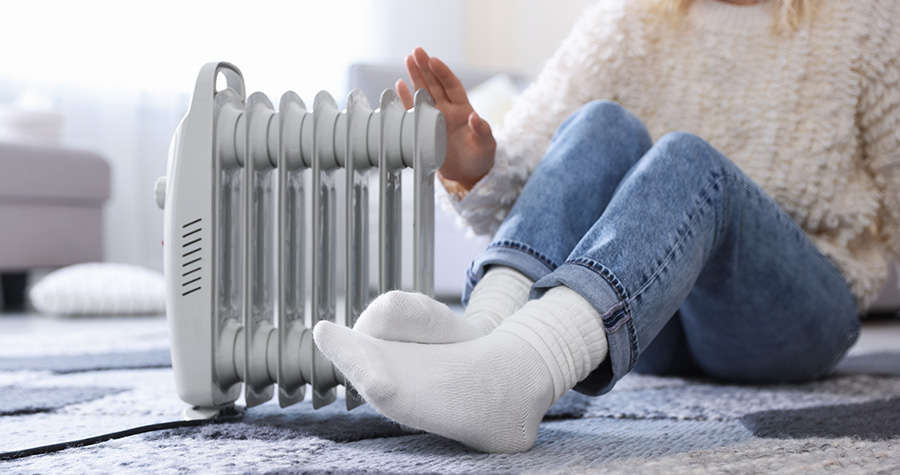
When winter sets in, auxiliary heating becomes tempting. We plug one in “just to help out,” turn on the stove “just a little”… and tell ourselves we’ve found THE solution. Really?
✅ When auxiliary heating is a good idea
Let’s be fair: auxiliary heating has its good points… if used properly.
- For occasional use: a colder room, a basement office, a rarely used bedroom.
- As a supplement, not as the main system. It gives you a boost, but it doesn’t do the whole job.
- While waiting for repairs or during exceptionally cold weather.
In short, like coffee after a bad night’s sleep: useful, but not a long-term solution.
⚠️ When it becomes a bad idea
Where it goes wrong is when auxiliary heating becomes a daily habit.
- It’s expensive : multiple electrical appliances consume a lot of energy. And the bill doesn’t hold back.
- It masks a real problem : poor insulation, a poorly maintained or poorly adjusted central system.
- Safety issues: risk of overheating, fire, or poor ventilation, especially with older or poorly positioned appliances.
Translation: it heats up, yes… but it can also heat up in a bad way.
🔎 The real question to ask yourself
If you need auxiliary heating all the time, the reality is probably that your main system is trying to tell you something. And often, it’s saying, “I need maintenance! Or modernization. Or a little love. ”
A backup heater can be a smart solution, as long as it remains a backup. Used over the long term, it quickly becomes a false economy… and sometimes a risky one.
It’s better to fix the source of the cold than to add more extension cords. Your comfort (and your wallet) will thank you. 😉